
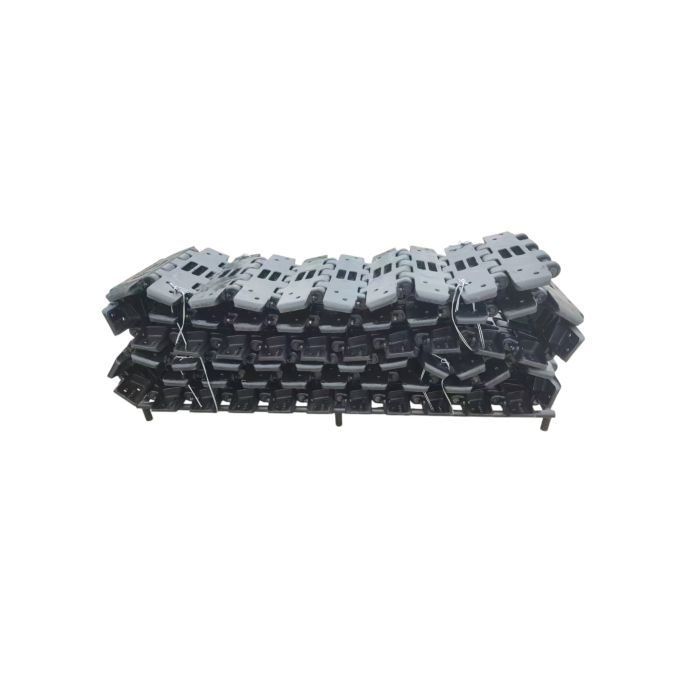
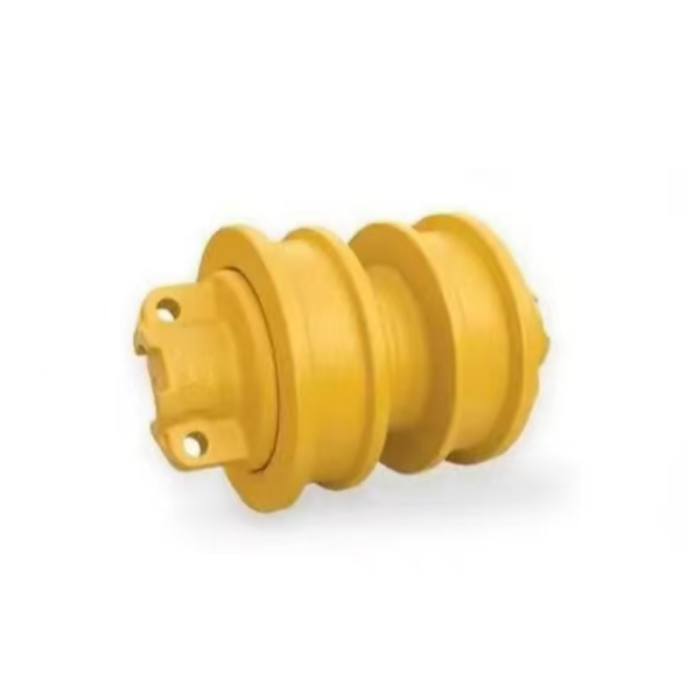
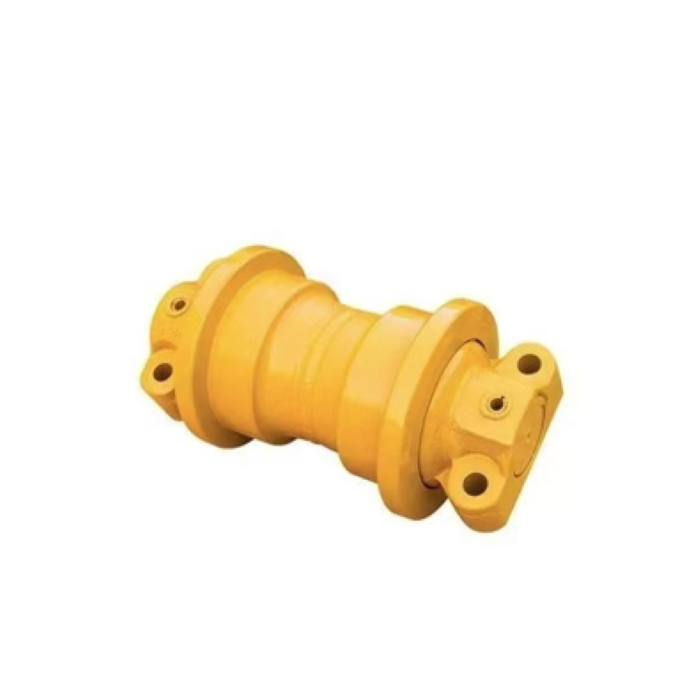
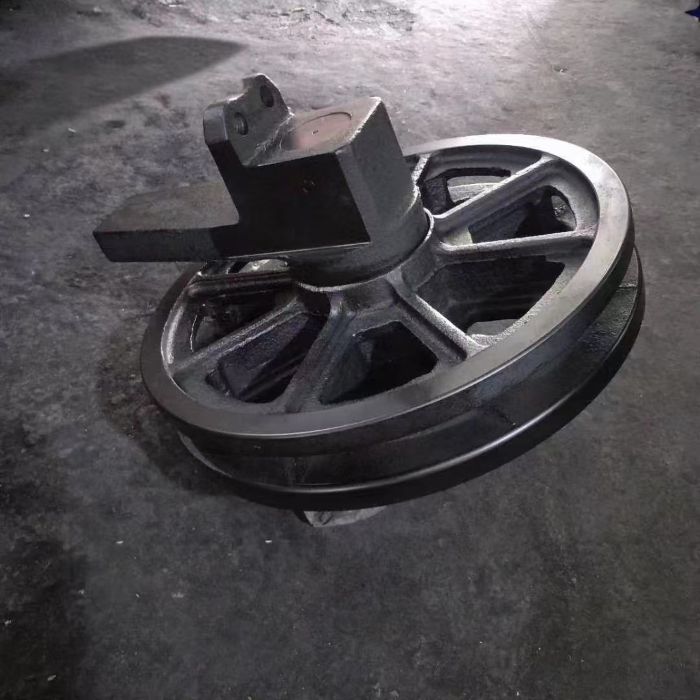
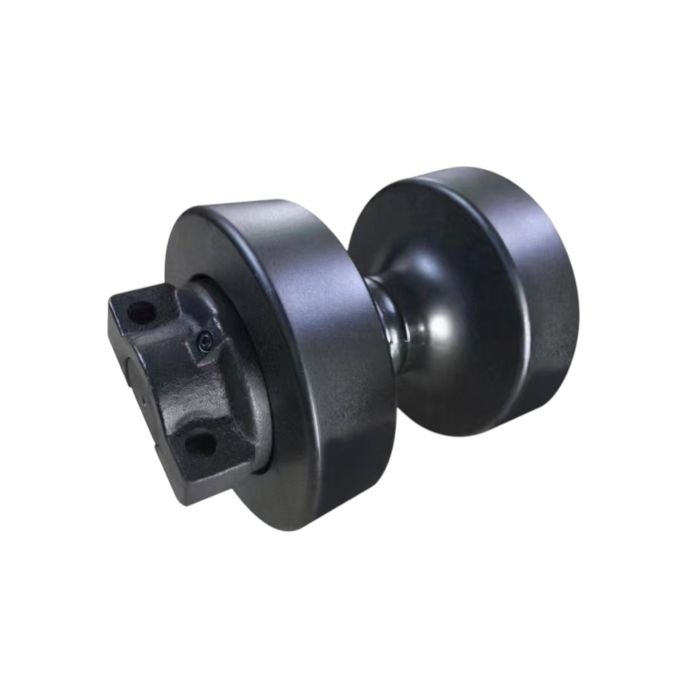

Crawler shoes and track pads are one of the chassis parts of construction machinery and are a kind of vulnerable parts of the construction machinery used. They are commonly used in construction machinery such as excavators, bulldozers, crawler cranes, pavers, etc.
What are the structures of crawler shoes and track pads?
Commonly used crawler shoes and track pads are divided into three types according to the grounding shape: single-ribbed, triple-ribbed and flat-bottomed. Some of them also use triangular track shoes and pads. Single-ribbed crawler shoes and track pads are mainly used for bulldozers and tractors, because these types of machinery require track shoes and pads to have higher traction when working. But they are rarely used on excavators. They are only used when the excavator is equipped with a drill frame or requires a larger horizontal thrust. When turning, a higher traction force is required, so the higher track ribs (i.e., track spikes) will squeeze out the soil (or ground) between the track ribs, thereby affecting the maneuverability of the excavator. Steel track shoes and pads can be divided into: excavator plates and bulldozer plates. These two are the most commonly used, with steel sections as raw materials. Then there is the wet floor used by bulldozers, commonly known as "triangular plate", which is a cast plate. Another cast plate is used on crawler cranes, and the weight of this plate ranges from tens of kilograms to hundreds of kilograms.
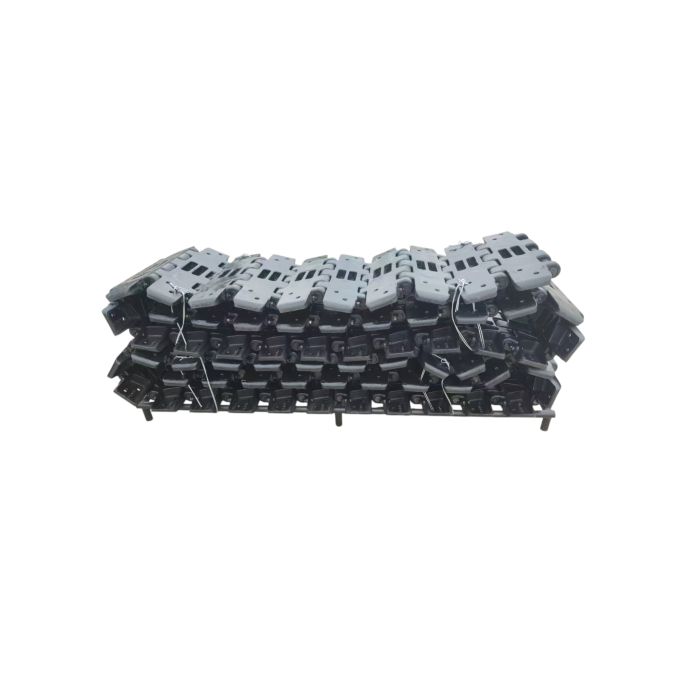
What are the uses of crawler shoes and track pads? :
Most excavators use three-ribbed crawler shoes and track pads, and a few use flat-bottomed track shoes and pads. When designing three-ribbed track shoes and pads, first find the grounding pressure and the meshing soil capacity between the ribs and the ground to ensure the necessary adhesion; secondly, the track shoes and pads should have higher bending strength and wear resistance. Three-ribbed track shoes and pads generally have two mud cleaning holes. When the track shoes and pads rotate around the drive wheel, the silt on the chain track segment can be automatically removed with the help of the gear teeth, so the mud cleaning hole should be located between the two screw holes that fix the crawler shoes and track pads to the chain track segment. In order to protect the ground surface and reduce turning resistance, it is more appropriate to use extended crawlers and flat-bottomed crawlers for crawler walking devices used in swamps or farmland. In order to ensure that the track chain does not get stones caught between two adjacent crawler shoes and track pads at any position (including ground contact, rotation around the drive wheel and guide wheel, and upper suspension position) and thus cause excessive stress, the pitch of the track shoes and pads is required to be adjusted very accurately, and the overlapping lip of appropriate shape should be designed. The function of the overlapping lip is to make the track shoes and pads close to each other to form a belt shape connected end to end. The track shoes and pads should be installed sequentially in the same direction. The smaller the pitch of the crawler, the smaller the rise of the crawler chain when it runs between the drive wheel and the guide wheel. In this way, the running uniformity is good, the wear of the crawler chain is low, and the driving efficiency is high during walking. However, its minimum pitch value should be determined according to the machine weight and the number of rows of crawler chains.
The hole spacing on the two rows of chain rails where the track shoes and pads are installed should generally be larger to facilitate the replacement of crawler shoes and track pads with different ground contact pressure ratios. The walking device used in swamps requires very wide track shoes and pads and track surfaces. Such ultra-wide track shoes and pads sometimes have high bending stress. For example, when an excavator is working on a ground mixed with residual tree roots, a large part of the machine weight falls on a track shoe and pad supported by the tree roots, which causes the track shoe and pad to produce very high bending stress, thus affecting the life of the track shoe and pad. In order to prevent the damage and bending of the track shoes and pads, the section modulus and bending strength must be increased. To increase the section modulus, the height of the track reinforcement must be increased, but this will significantly increase the turning resistance and affect the maneuverability of the excavator. Therefore, for the walking device with a width of more than 700 mm for use in swamps, it is advisable to use steel rolled hollow track shoes and pads. Most of the two ends of the track shoes and pads used in swamps are made into slope angles, which is convenient for protecting the surface of the ground, reducing turning resistance and sinking, and when walking on hard ground, the shortening of the supporting force arm can reduce the bending moment of the edge load. Excavators with track shoes and pads with a width of more than 800 mm are mainly used in swamps and should not be used in general occasions. Excavators with widened and lengthened crawler walking devices are particularly suitable for pipeline projects.
Wear pattern:
During normal operation, the track pin slowly rotates backward in the pin hole, and both wear evenly, the pin hole gradually becomes larger, and the pin gradually becomes thinner. If the operation is improper, such as high-speed turning, sudden start, or entering muddy water, weeds, etc., which causes the pin to be blocked, the left and right sides of the crawler shoes and track pads will be overloaded and bend downward, the pin will be deformed and bent, and cannot rotate in the pin hole. The pin and the pin hole will become sliding friction, and the friction area is limited to a small part of the contact surface. The pin is gradually worn into a curved shape, and the pin hole also becomes an ellipse. The increase in the pin hole causes the track pitch to lengthen (the pitch is the center distance of the holes at both ends of the track shoes and pads), so the track shoes and pads and the drive wheel gnaw each other, the track shoes and pads are worn through, and the drive wheel teeth are blade-shaped. According to measurements, when the pitch changes from 174 mm to 184 mm, the opening width of the drive wheel teeth changes from 87 mm to 97 mm, and the normal rolling engagement is completely destroyed. Because the pitch of track shoes and pads is elongated, the supporting rollers will jump when walking, which accelerates the wear of the track part of track shoes and pads. When the track part sinks more than 4 mm, it should be repaired. The wear of the guide part of track shoes and pads is mainly caused by track deviation, serious deformation of track shoes and pads, and excessive axial shaking of supporting rollers and guide wheels. Common scrapped track shoes and pads are severely worn or worn out at the meshing part with the drive wheel.
Through the introduction of this article, I believe that everyone has a deeper understanding of crawler shoes and track pads. Previously, we also shared how to maintain the crawler of a small excavator? Tips for replacing supporting rollers and other related knowledge articles about four-wheel belts. You can click the link to jump to read, hoping to be able to help everyone!